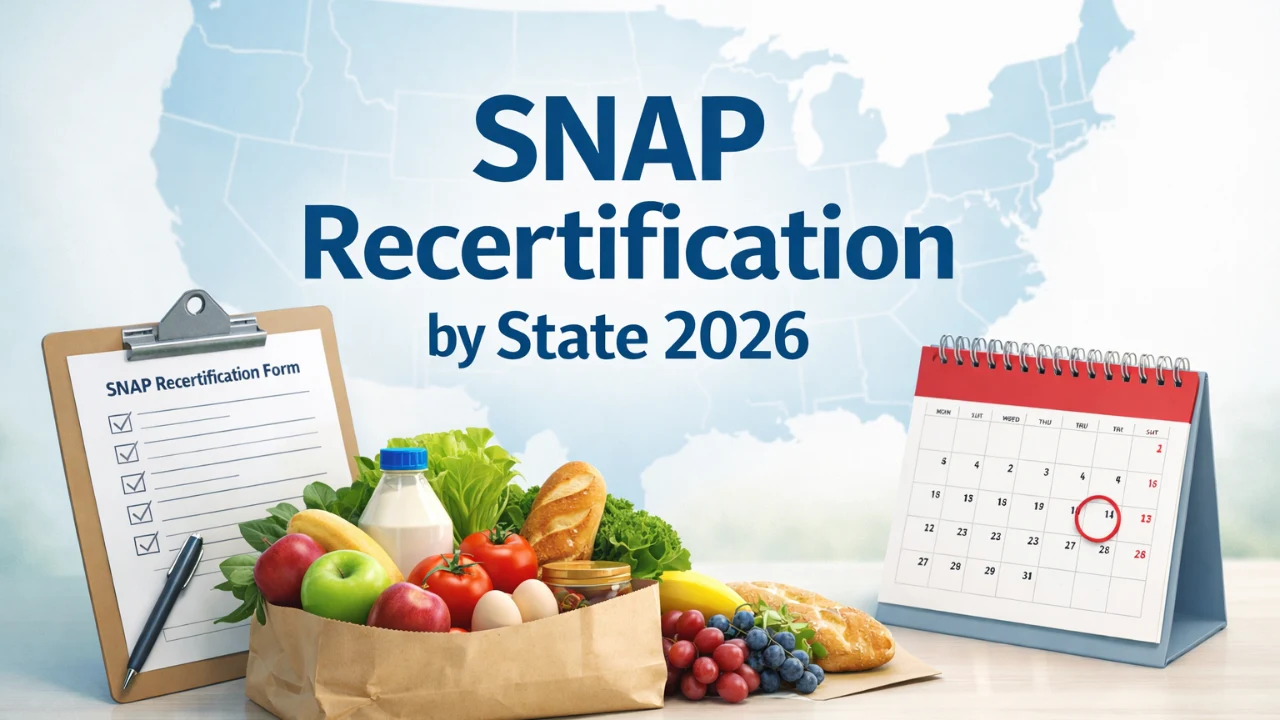
SNAP benefits don’t last forever. If you get food stamps, you have to renew them again and again. This process is called SNAP recertification.
In 2026, SNAP recertification still follows federal rules from the USDA, but each state runs its own system. That means deadlines, interviews, and renewal steps can change depending on where you live.
This guide explains SNAP recertification by state 2026 in simple words. You’ll learn what it is, why it matters, what papers you need, and how to renew SNAP in all 50 U.S. states without losing benefits.
What Is SNAP Recertification?
SNAP recertification is when the government checks if you still qualify for food stamps.
The SNAP office looks at things like:
- How much money your household makes
- Who lives with you
- Your job or work status
- Rent and utility costs
SNAP recertification is also called:
- SNAP renewal
- Food stamp renewal
- SNAP eligibility renewal
If you don’t complete recertification on time, your benefits can stop, even if you still qualify.
Why SNAP Recertification Matters in 2026
In 2026, many states use online systems and computer checks. This makes the process faster, but it also means mistakes are caught quickly.
SNAP recertification matters because:
- SNAP does not renew forever
- Missing a deadline can stop benefits
- Restarting benefits can take weeks
- Food help may stop suddenly
If SNAP helps your family buy food, staying on top of recertification is very important.
Who Must Recertify for SNAP Benefits?
You must recertify if:
- You already get SNAP benefits
- Your SNAP period ends in 2026
- Your income or household changed
Typical Certification Periods
- Most households: Every 6 or 12 months
- Seniors or disabled households: Sometimes up to 24 months
- ABAWDs: Often shorter periods
Each state decides the exact time.
When Do You Need to Recertify?
Most states want you to recertify before your last month of SNAP benefits.
General Timeline
- SNAP sends a renewal notice
- You submit the renewal form
- Interview (if needed)
- Documents are checked
- Decision is made
If you renew early, your benefits usually continue without problems.
How SNAP Recertification Works Step by Step
Step 1: Get Your Recertification Notice
This notice tells you your deadline. Don’t ignore it.
Step 2: Submit the Renewal Application
You can usually renew:
- Online
- By mail
- In person at a SNAP office
Step 3: Complete an Interview (If Required)
Some states require a phone or in-person interview. Others don’t.
Step 4: Send Required Documents
Send current and correct documents only.
Step 5: Receive a Decision
If approved, your SNAP benefits continue.
Documents Commonly Required for SNAP Recertification
Most states ask for:
- Proof of income (pay stubs, benefits letters)
- Rent or mortgage papers
- Utility bills
- ID or Social Security info
- Medical costs (for seniors or disabled people)
Some states already check this info electronically.
SNAP Recertification by State 2026 (All 50 States)
Rules can change by county, but this is the general picture.
States A–M
- Alabama: Online or mail renewal; interview often required
- Alaska: Online renewal; interviews common
- Arizona: HEA portal; phone interviews common
- Arkansas: Access portal; interview required
- California: County-based; interviews often waived
- Colorado: PEAK system; interview sometimes waived
- Connecticut: Online renewal; phone interview common
- Delaware: ASSIST portal; interview required
- Florida: ACCESS Florida; interview required for most
- Georgia: Gateway portal; interview required
- Hawaii: Online or in person; interview often required
- Idaho: Idalink portal; phone interview common
- Illinois: ABE portal; interviews sometimes waived
- Indiana: FSSA portal; interview required
- Iowa: DHS portal; interview required
- Kansas: DCF Self-Service; interview required
- Kentucky: Kynect; interviews common
- Louisiana: CAFÉ portal; interview required
- Maine: My Maine Connection; interview sometimes waived
- Maryland: MyDHR; interview sometimes waived
- Massachusetts: DTA Connect; interviews often waived
- Michigan: MI Bridges; interview sometimes waived
- Minnesota: MNbenefits; interview varies
- Mississippi: Access portal; interview required
- Missouri: MyDSS; interview required
States N–Z
- Montana: ApplyMT; interview required
- Nebraska: ACCESSNebraska; interview required
- Nevada: Access Nevada; phone interviews common
- New Hampshire: NH EASY; interview required
- New Jersey: NJOneApp; interview sometimes waived
- New Mexico: YesNM; interviews common
- New York: County-based; interviews sometimes waived
- North Carolina: ePASS; interview required
- North Dakota: Self-Service Portal; interview required
- Ohio: Benefits.Ohio.gov; interview required
- Oklahoma: OKDHSLive; interview required
- Oregon: ONE system; interviews often waived
- Pennsylvania: COMPASS; interview sometimes waived
- Rhode Island: DHS portal; interview required
- South Carolina: SC Thrive; interview required
- South Dakota: DSS portal; interview required
- Tennessee: One DHS; interview required
- Texas: YourTexasBenefits; strict deadlines
- Utah: MyCase; interview required
- Vermont: MyBenefits; interviews often waived
- Virginia: CommonHelp; interview sometimes waived
- Washington: Washington Connection; interviews often waived
- West Virginia: WV PATH; interview required
- Wisconsin: ACCESS Wisconsin; interview sometimes waived
- Wyoming: Online or mail; interview required
State vs Federal Roles in SNAP Recertification
The USDA sets the main SNAP rules, but:
- States run the program
- Counties handle cases
- Interviews and timing can change
That’s why SNAP recertification feels different in each state.
What Happens If You Miss SNAP Recertification?
If you miss it:
- SNAP benefits usually stop
- You may need to reapply
- Some states allow quick reinstatement
If You Missed Your Deadline
- Contact your local SNAP office
- Apply again if needed
- Ask about emergency SNAP
Online vs In-Person SNAP Renewal
Online Renewal
Pros
- Fast
- Easy uploads
- Check status anytime
Cons
- Tech problems
- Missed messages
In-Person Renewal
Pros
- Help from staff
- Fewer mistakes
Cons
- Travel needed
- Long wait times
Common Mistakes That Cause Benefit Loss
- Missing the deadline
- Ignoring interview calls
- Sending wrong documents
- Thinking SNAP renews automatically
- Not reporting income changes
Tools That Help With SNAP Recertification
- State SNAP websites
- County SNAP offices
- Local nonprofits
- Food banks
Simple reminders on your phone can really help.
Official & Helpful Resources
Official SNAP Resources
- USDA SNAP Program Overview – SNAP rules, eligibility criteria, and program updates
- State SNAP Agency Directory – Find your state or county SNAP office contact information
- SNAP Eligibility & Recertification Info – Government guidelines on SNAP renewal and benefits
Helpful Resources
- Food Stamps Payment Schedule by State 2026 – Check SNAP payment dates for all 50 states
- SNAP USDA – Latest Food Stamps updates, guides, and state-by-state information
Food Stamps recertification by state 2026 (FAQs)
1. How often do I recertify for SNAP in 2026?
Usually every 6 to 12 months.
2. Is SNAP recertification required in every state?
Yes, all states require it.
3. Do all states require interviews?
No, it depends on the state and household.
4. Can I renew SNAP online?
Yes, most states allow online renewal.
5. What if my SNAP stops?
You may need to reapply or request reinstatement.
6. Do seniors recertify less often?
Yes, many states give longer periods.
7. Does SNAP recertification cost money?
No, it’s always free.
Conclusion
SNAP recertification by state in 2026 is something every SNAP household must do. Even though the program is federal, states and counties control the rules, which is why deadlines and interviews are different everywhere.
The best way to stay safe is to renew early, check your SNAP portal often, and respond quickly to calls or letters. Doing this helps make sure your food benefits don’t stop when you need them most.