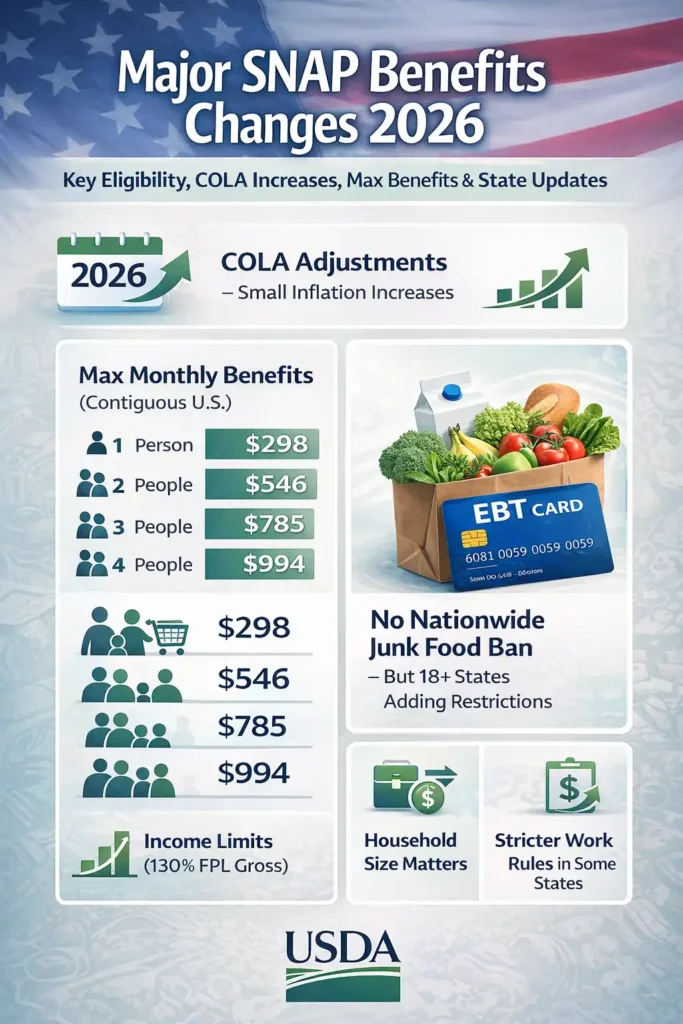
The major SNAP benefits changes 2026 are here, bringing modest COLA increases, new state-level junk food restrictions in 18 states, expanded work requirements, and shifts in eligibility. Stay informed to protect your food assistance this year! In 2026, there are some real updates hitting, like adjustments for inflation, tweaks to how much you can get, and stuff varying by state. Nothing crazy dramatic, but def worth knowing if you’re on it or thinking about applying.
This guide breaks it all down in easy language so you can get what’s up and prep accordingly.
What Is SNAP and Why 2026 Is a Turning Point
SNAP is this federal program run by the USDA, but your state handles the day-to-day. You get money loaded on an EBT card each month—it basically works like a debit card for food at grocery stores and approved spots.
Why 2026 Matters
2026 feels like a big deal for SNAP cuz:
- Inflation tweaks are still rolling through benefit amounts
- All the temp pandemic stuff is totally gone now
- States are trying out new tech, rules, and ways to check eligibility
- Politicians keep chatting about bigger long-term changes to food help programs
Basically, it’s more about things settling down, getting modernized, and some areas getting stricter while still looking out for people who really need it.
All Confirmed SNAP Changes in 2026 (Federal Level)
Not every year is wild, but 2026 has some solid federal updates that actually affect people.
Cost-of-Living Adjustments (COLA)
Benefits get bumped every year to match food prices going up. For 2026 (starting Oct 2025 technically):
- Max benefit amounts got recalculated
- Deductions for stuff like housing, utilities, and childcare went up too
- A lot of households might see a small boost, others stay the same
Good news: these happen automatically—no need to reapply just for this.
Standard Deduction Updates
This deduction lowers the income they count for eligibility. In 2026:
- It went up (like to $209/month for households of 1-3 people in most states)
- Makes it easier for some folks to still qualify even if their paychecks creep up a bit
SNAP Eligibility Rules in 2026 (Updated)
The main rules haven’t flipped upside down, but here’s the clear rundown.
Income Limits
They check two things:
- Gross income (before taxes and stuff)
- Net income (after deductions)
Most households gotta be at or under 130% of the federal poverty level for gross, and meet net limits too.
Households with elderly (60+) or disabled members? They usually just need to hit the net income part.
Asset (Resource) Limits
In 2026:
- Tons of states still use broad-based categorical eligibility (BBCE)
- That means higher savings allowed or even no asset limit in many places
If your state doesn’t do BBCE:
- They might count your savings
- But retirement accounts and your main home are usually off-limits
Household Size Matters
Bigger household = higher income limits + bigger max benefits. Super helpful for families with kids.
SNAP Benefit Amounts in 2026
Everyone’s always like, “Okay, but how much am I actually getting?”
How SNAP Benefits Are Calculated
It depends on:
- How many people in your house
- Your countable income
- Monthly expenses (rent, utilities, childcare, medical stuff)
The idea is you spend about 30% of your own money on food, and SNAP covers the rest to fill the gap.
Maximum Monthly Benefits
USDA sets these max amounts each year based on food costs. For 2026 in the 48 states + D.C.:
- 1 person: up to $298
- 2 people: up to $546
- 3 people: up to $785
- 4 people: up to $994
- And it keeps going up from there
No income? You usually get the full max. Working? You get partial. (Alaska, Hawaii, etc. have higher maxes cuz food costs more there.)
Actual amounts vary a ton depending on your situation.
State-Level SNAP Changes to Watch in 2026
SNAP is federal, but states get to flex a bit.
States Expanding Access
Some places are making it easier:
- Smoother online apps
- Longer times before you recertify
- More help reaching seniors and families
States Adding Restrictions
Others are going the other way:
- Pushing work requirements harder
- Dropping old waivers
- Extra verification stuff
So yeah, your SNAP experience can feel pretty different depending on your state.
SNAP Payment Schedule Changes in 2026
Benefits drop once a month usually.
EBT Deposit Timing
Most states still do staggered schedules:
- Dates based on case number, last name, or birthday
Delays and Early Deposits
Stuff can delay payments like:
- Holidays
- Tech upgrades
- Missing recert stuff
No nationwide early deposits, but some states might tweak their own schedules.
How to Apply or Reapply for SNAP in 2026
Applying is honestly easier than a lot of people think.
How to Apply
Options:
- Online on your state’s SNAP site (usually the fastest)
- In person at a local office
Documents You May Need
Stuff like:
- Income proof (pay stubs, etc.)
- Rent/mortgage bills
- Utility bills
- ID and SSN
Recertification and Renewals
In 2026:
- Most people recertify every 6-12 months
- Miss it and benefits can pause
Report any income or household changes ASAP.
FAQs for Major SNAP benefits changes 2026
Will SNAP benefits increase in 2026?
Yeah, some folks get a small bump from COLA/inflation adjustments, but not huge for everyone.
Are junk food bans part of SNAP in 2026?
No nationwide ban. A few states are starting restrictions on soda, candy, etc., but most places still let you buy pretty much anything grocery-wise.
Can immigrants receive SNAP in 2026?
Depends on status, how long you’ve been here, and household. Kids and some legal residents often qualify.
Are work requirements returning?
They exist, but change by state. Exemptions for caregivers, disabled peeps, or high-unemployment spots.
What Could Change Later in 2026 (Policy Watch)
Things always shift a little.
Possible stuff:
- New test programs
- EBT tech upgrades
- Congress messing with budgets
Not set in stone, but good to keep an eye on if SNAP’s a big part of your life.
Final Thoughts: How to Stay Prepared for SNAP in 2026
SNAP changes in 2026 is more about fine-tuning than big cuts. It still helps millions, but things are getting more organized and state-specific.
Best Tips Going Forward
- Hit up your state’s SNAP website regularly for updates
- Report changes quick
- Keep copies of all your docs
- Don’t just assume you’re out—lots of working families still qualify
Stay on top of it, and SNAP can keep being that solid help when things are tight. For more new information must visit Snapusda.com